Tomato
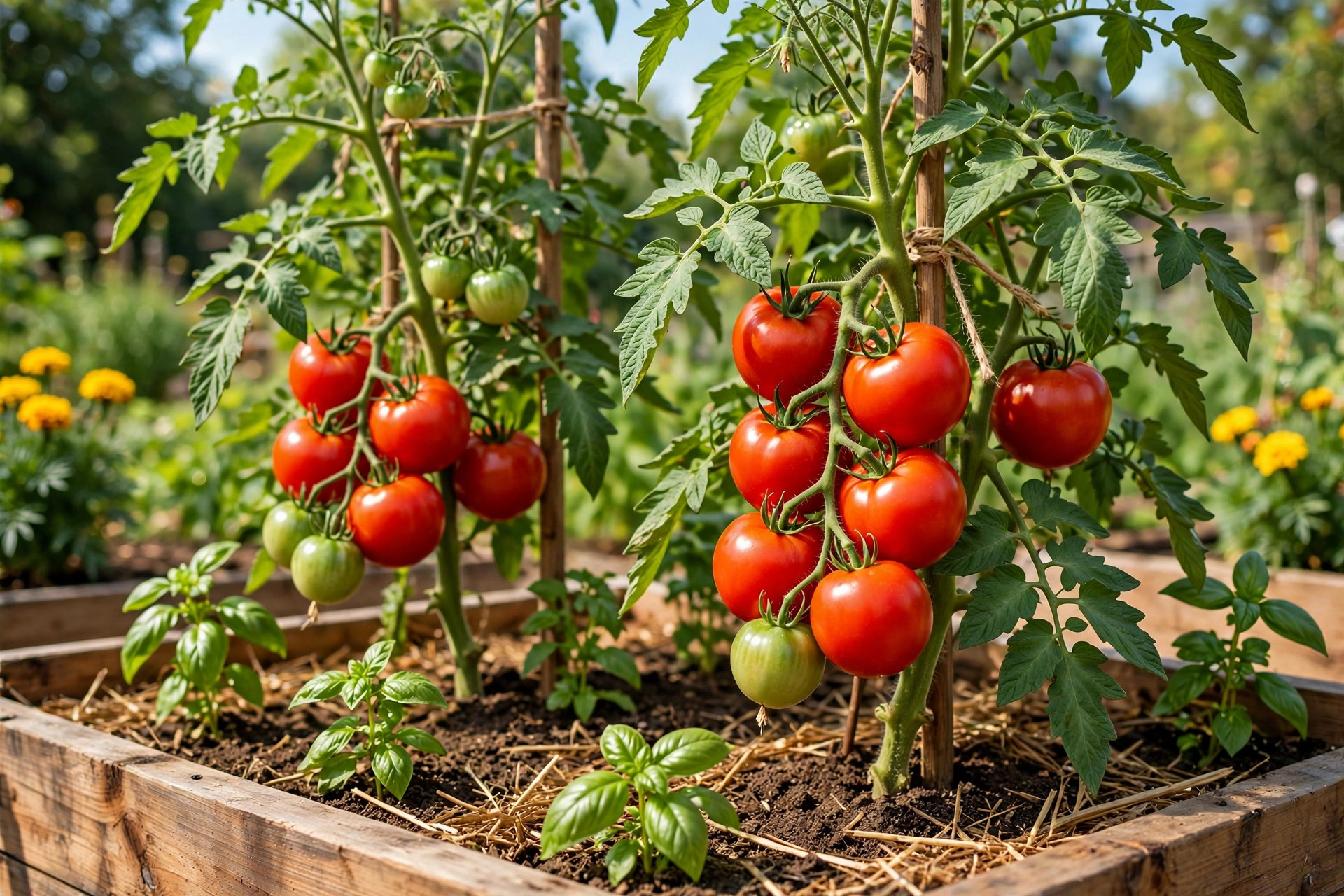
warm-season crop
At a glance
| Suitable zone groups | All four zone groups (3-4, 5-6, 7-8, 9-10), as a tender warm-season annual |
|---|---|
| Planting window | See the guide text below, in general terms relative to your last spring frost |
| Sun | Full sun, at least 6 to 8 hours daily |
| Soil | Rich soil mixed with plenty of compost |
| Watering | Deep, regular watering at the base, keeping soil evenly moist |
About this plant
Tomato is a rewarding summer staple for beginners, though it requires steady watering and sturdy physical support as it grows. It performs well across cold (zones 3-4), cool (zones 5-6), warm (zones 7-8), and hot (zones 9-10) regions, where it is cultivated everywhere as a tender warm-season annual. Start seeds indoors 6 to 8 weeks (verify locally) before the average last spring frost, then move young plants into the garden a few weeks after the last frost once the soil feels warm to the touch.
Tomatoes need full sun for at least 6 to 8 hours daily, rich soil mixed with plenty of compost, and deep, regular watering applied right at the base of the plant to keep the ground evenly moist without wetting the foliage.
Common beginner failures and fixes
- Yellow bottom leaves: Water evenly at ground level and avoid splashing soil onto lower foliage.
- Dark, sunken spots on fruit bottoms: Keep soil moisture consistent to prevent calcium movement issues.
- Vines flopping over: Install a sturdy stake or wire cage at planting time to support growth.
- Flowers drop without setting fruit: Ensure plants get full sun and avoid high-nitrogen fertilizers.
Beginner checklist
- Confirm all danger of spring frost has passed.
- Choose a location with maximum daily sunlight.
- Mix organic compost into the planting hole.
- Set up a support stake or trellis early.
- Water deeply around the roots, avoiding the leaves.
Good neighbours
Plants that share a bed well with this crop. Each pairing notes why, and how strong the evidence is — “traditional practice” means gardeners have done it for generations without a solid trial behind it.
- Basil — A few field and glasshouse studies found basil can reduce thrips on tomatoes. (Tested in trials) No trial support for better flavour or hornworm repelling.
- Marigold — French marigold releases limonene, which deterred glasshouse whitefly in trials; its roots can also reduce some root nematodes. (Tested in trials) Glasshouse trials. Outdoors the effect is weaker, and a few scattered plants do little — it needs a solid planting from the start of the season.
- Carrot — Different root depths, so the two share a bed without competing for the same soil layer. (Traditional practice)
Keep apart
Only pairs with a shared pest or disease go here — a weak or traditional claim never earns a place in this list.
- Potato — Same family. Both catch late blight, which spreads from one to the other. (Tested in trials)
Companion planting at a glance — the full table for all 20 pilot crops, with the Three Sisters note and the claims this site deliberately leaves out.
Plant rescue
These indoor rescue pages relate to problems this plant's own guide already mentions:
Zone groups and planting windows here are general guidance. Confirm your own zone and last frost date locally before planting.