Potato
cool-season crop
At a glance
| Suitable zone groups | All four zone groups (3-4, 5-6, 7-8, 9-10), as a cool-season annual |
|---|---|
| Planting window | See the guide text below, in general terms relative to your last spring frost |
| Sun | Full sun |
| Soil | Loose, deep, well-draining soil |
| Watering | Even moisture, never soggy |
About this plant
Potatoes are a versatile staple crop grown as a spring-planted annual across all zones. Plant seed potato pieces in early spring once the soil is workable. They grow best in full sun and loose, well-draining, slightly acidic soil that allows tubers to expand easily.
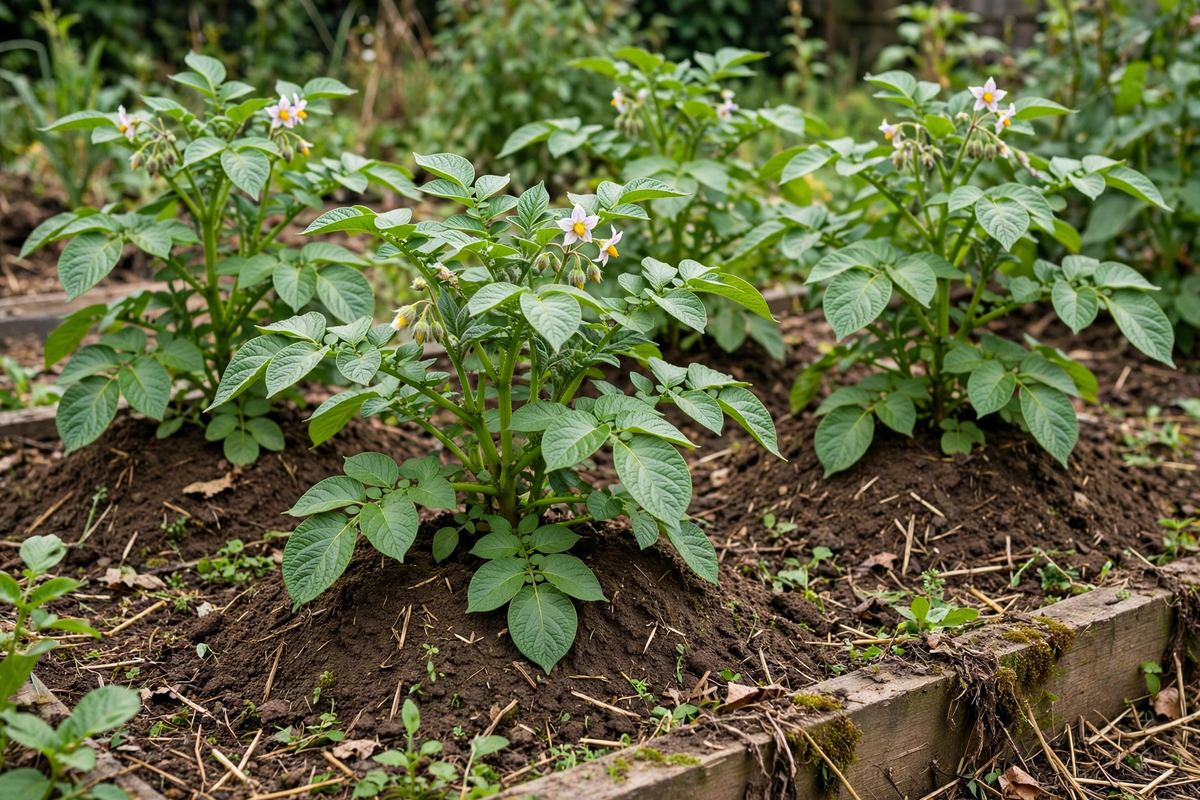
As the green stems grow upward, mound soil or mulch around the base of the plants—a process called hilling—to protect developing tubers from sunlight exposure. Keep the soil evenly moist but never soggy to promote clean, healthy tuber development.
Common beginner failures and fixes
- Green or bitter potatoes: Hill soil over exposed tubers to keep them completely shielded from sunlight.
- Tuber rot: Plant in well-draining soil and avoid soggy conditions, especially early in the season.
- Scabby skin on tubers: Maintain steady soil moisture and avoid adding lime to keep soil slightly acidic.
- Foliage damage from pests: Inspect leaves regularly and remove beetle pests by hand.
Beginner checklist
- Select a sunny location with loose, rock-free, well-draining soil.
- Plant seed pieces in early spring into prepared trenches or beds.
- Hill soil or mulch around growing stems as plants increase in height.
- Maintain consistent soil moisture throughout the growing season.
- Harvest young potatoes after flowering or mature potatoes after foliage dies back.
Zone groups and planting windows here are general guidance. Confirm your own zone and last frost date locally before planting.