Radish
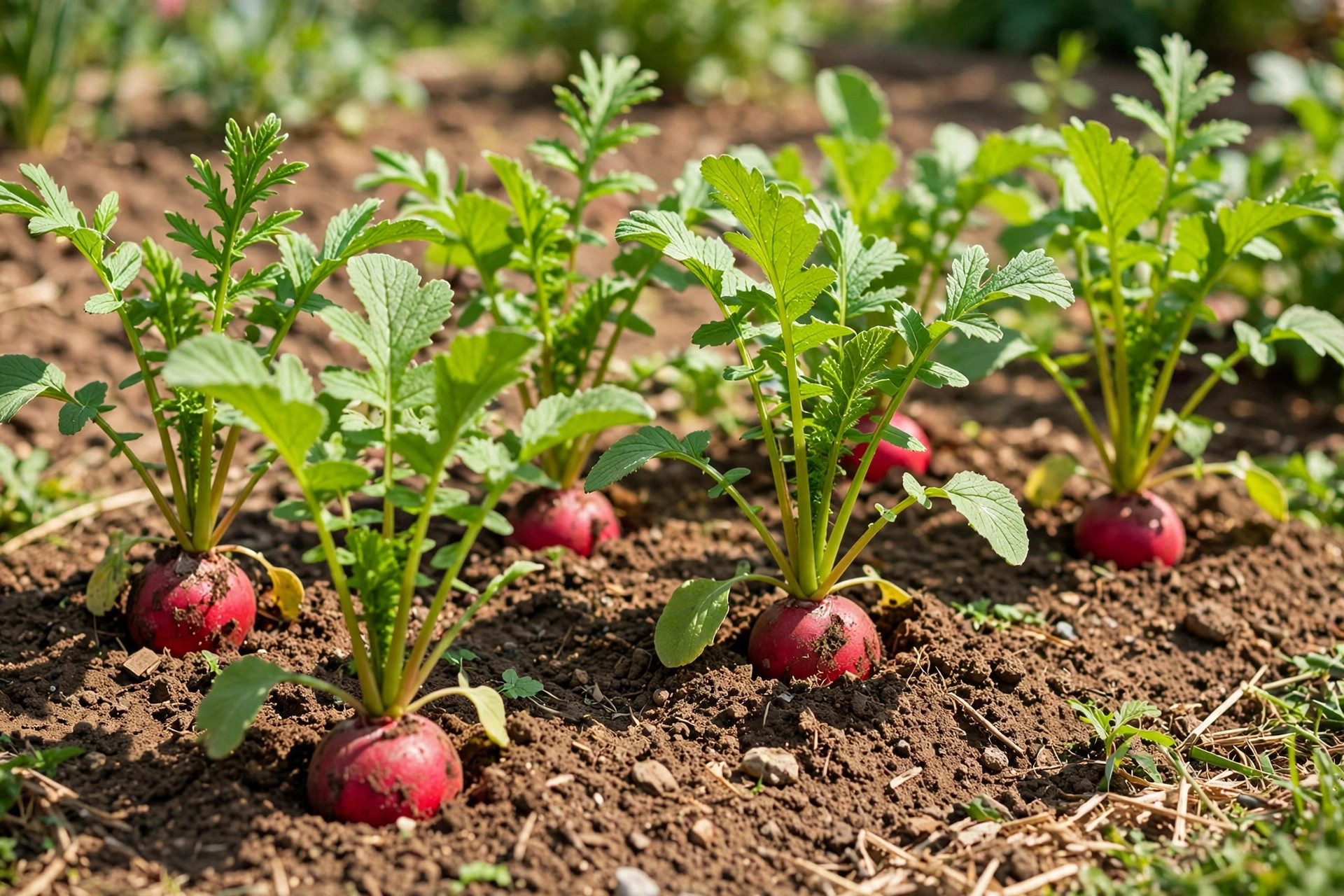
cool-season crop
At a glance
| Suitable zone groups | All four zone groups, as a cool-season annual |
|---|---|
| Planting window | See the guide text below, in general terms relative to your last spring frost |
| Sun | Full sun, tolerates partial shade when temperatures rise |
| Soil | Loose, fine-textured soil free of rocks and hard clay |
| Watering | Consistent, light, frequent watering |
About this plant
Radish is the ultimate starter vegetable for absolute beginners, delivering a fully grown harvest faster than almost any other garden plant.
This fast-growing vegetable is cultivated as a cool-season annual in cold (zones 3-4), cool (zones 5-6), warm (zones 7-8), and hot (zones 9-10) regions.
Direct sow seeds outdoors starting early in spring a few weeks before the last spring frost. Because radishes mature so rapidly, you can sow small patches every two weeks until the weather turns warm.
Radishes need a full sun location to build plump roots, though they tolerate partial shade when temperatures rise. They require loose, fine-textured soil free of rocks, sticks, or hard clay blocks. Keep the soil consistently moist with light, frequent watering to encourage fast growth.
Common beginner failures and fixes
- Plants produce leafy tops but no usable root bulb underneath.: Thin seedlings early to give roots space, and avoid high-nitrogen fertilizers.
- Roots are woody, tough, or unbearably hot in flavor.: Harvest immediately when roots reach full size rather than leaving them in ground.
- Radish bulbs split open down the middle.: Water consistently rather than letting the soil dry out completely between waterings.
- Tiny holes pepper the foliage of young plants.: Drape thin insect barriers over the seedbed right after planting.
Beginner checklist
- Sow seeds directly into loose, stone-free garden soil.
- Space or thin young sprouts so roots can expand outward.
- Provide light, regular water so the ground never dries out completely.
- Check root tops visible at the soil line for size.
- Pull roots promptly when mature for the best flavor and texture.
Zone groups and planting windows here are general guidance. Confirm your own zone and last frost date locally before planting.