Zucchini
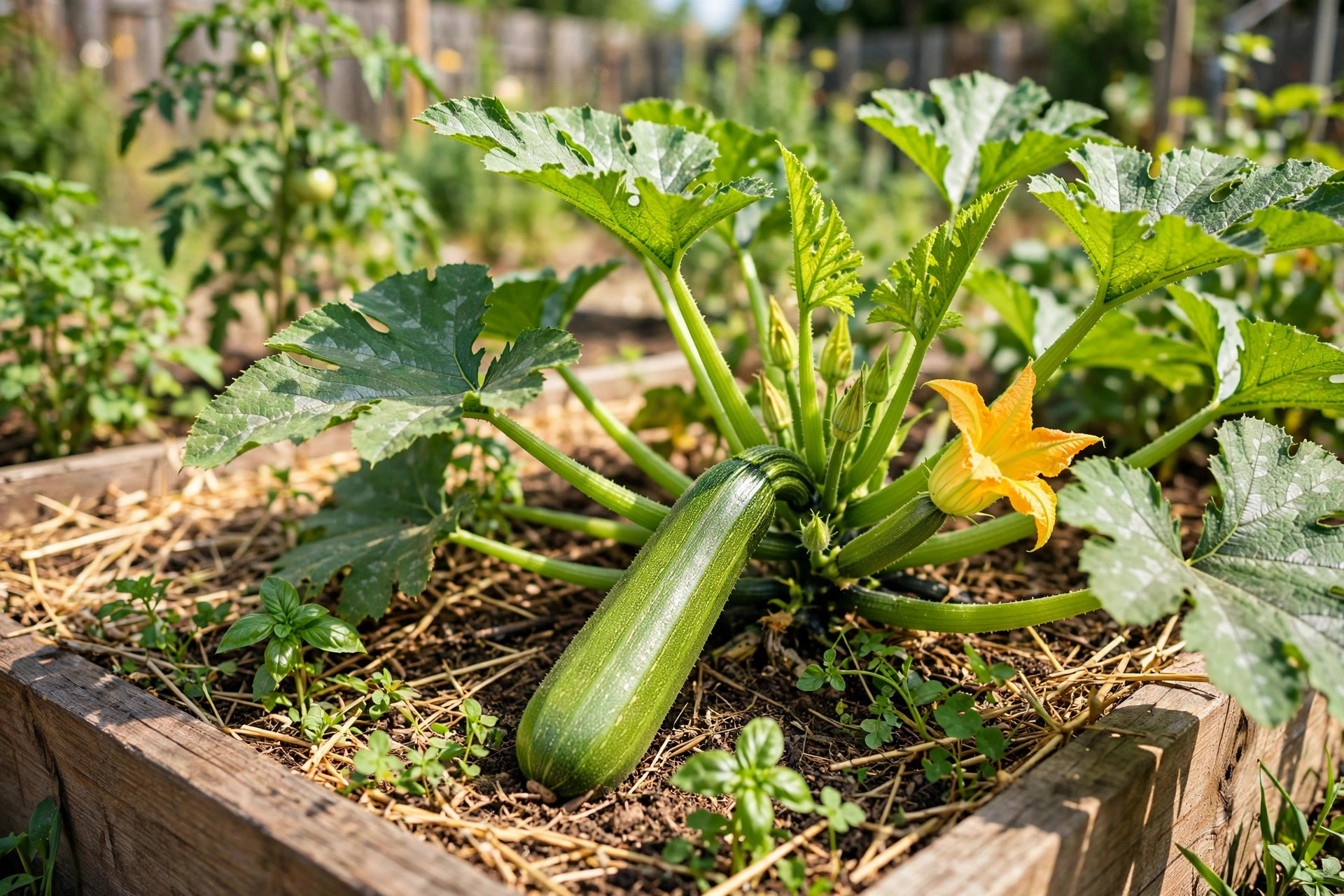
warm-season crop
At a glance
| Suitable zone groups | All four zone groups, as a warm-season annual in the frost-free months |
|---|---|
| Planting window | See the guide text below, in general terms relative to your last spring frost |
| Sun | Full sun, uninterrupted light all day |
| Soil | Rich, loose soil mixed generously with compost |
| Watering | Deep watering once or twice a week at the base |
About this plant
Zucchini is an ideal crop for first-time gardeners who want a fast-growing, heavy harvest from just a couple of plants.
This vegetable is grown as a warm-season annual in cold (zones 3-4), cool (zones 5-6), warm (zones 7-8), and hot (zones 9-10) regions during the frost-free months.
Direct sow seeds outdoors or set out nursery transplants only after the last spring frost has passed and the soil feels thoroughly warm to the touch. Planting too early in cold, damp soil will cause seeds to rot before sprouting.
Zucchini requires full sun to thrive, needing a bright spot in the garden that receives uninterrupted light all day. It prefers rich, loose soil mixed generously with organic compost. Water deeply once or twice a week, directing the stream at the base of the plant to keep the large leaves completely dry and healthy.
Common beginner failures and fixes
- Small fruits turn yellow, shrivel, and rot before growing.: Hand-pollinate blossoms with a soft brush or grow pollinator-friendly flowers nearby.
- Leaves develop a white powdery coating late in the season.: Ensure wider spacing between plants for better airflow and avoid overhead leaf watering.
- Stems become soft and the entire vine suddenly wilts.: Wrap the base of young stems loosely with foil to stop stem-boring pests.
- Squash grows excessively large, seedy, and tough.: Pick fruits when they are young, small, and tender.
Beginner checklist
- Choose a sunny garden spot with space for spreading leaves.
- Wait until after the last spring frost to plant outdoors.
- Amend the planting area with a thick layer of compost.
- Water soil deeply at ground level rather than from above.
- Harvest young squashes every few days to encourage continuous fruiting.
Zone groups and planting windows here are general guidance. Confirm your own zone and last frost date locally before planting.