Tomato
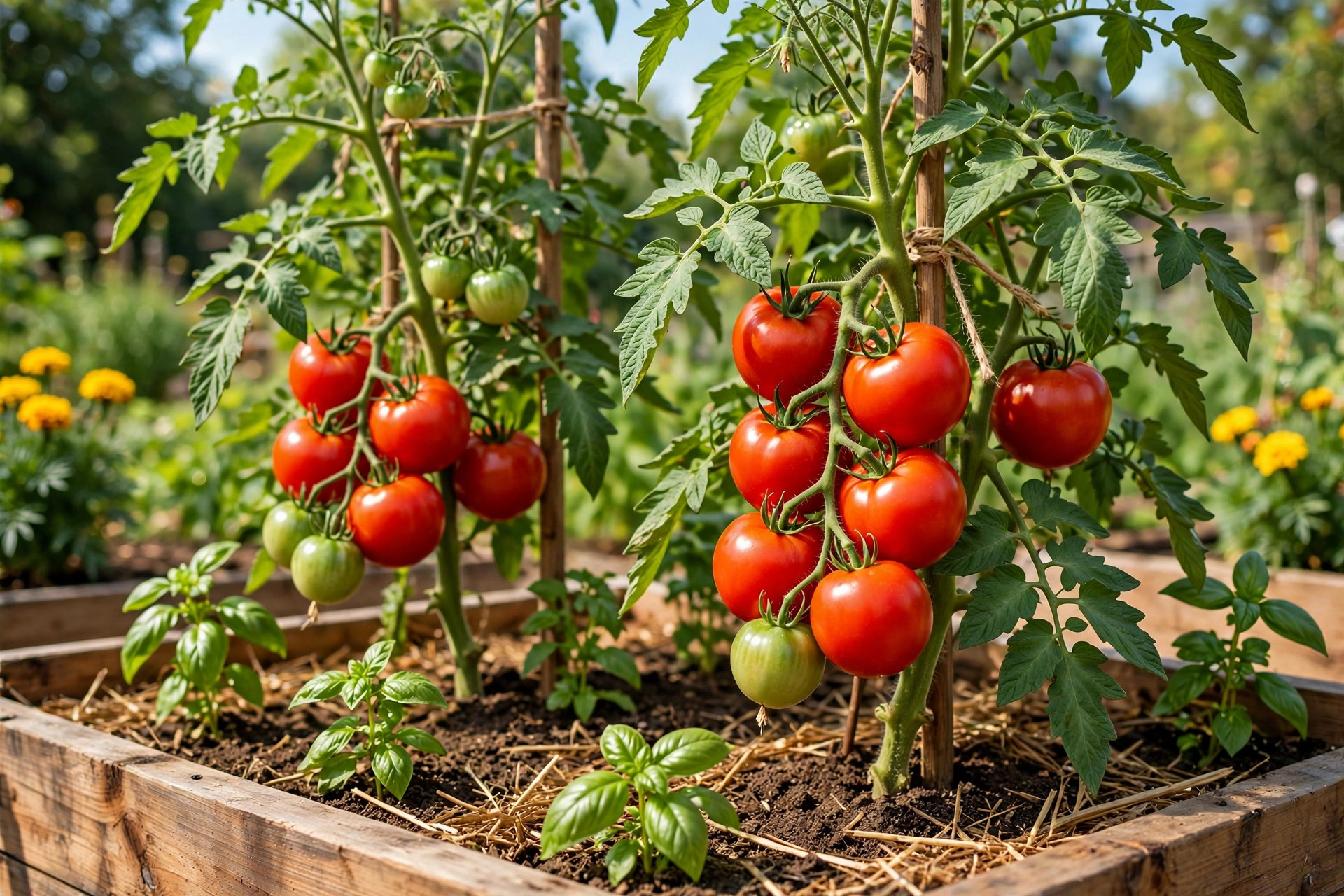
warm-season crop
At a glance
| Suitable zone groups | All four zone groups (3-4, 5-6, 7-8, 9-10), as a tender warm-season annual |
|---|---|
| Planting window | See the guide text below, in general terms relative to your last spring frost |
| Sun | Full sun, at least 6 to 8 hours daily |
| Soil | Rich soil mixed with plenty of compost |
| Watering | Deep, regular watering at the base, keeping soil evenly moist |
About this plant
Tomato is a rewarding summer staple for beginners, though it requires steady watering and sturdy physical support as it grows. It performs well across cold (zones 3-4), cool (zones 5-6), warm (zones 7-8), and hot (zones 9-10) regions, where it is cultivated everywhere as a tender warm-season annual. Start seeds indoors 6 to 8 weeks (verify locally) before the average last spring frost, then move young plants into the garden a few weeks after the last frost once the soil feels warm to the touch.
Tomatoes need full sun for at least 6 to 8 hours daily, rich soil mixed with plenty of compost, and deep, regular watering applied right at the base of the plant to keep the ground evenly moist without wetting the foliage.
Common beginner failures and fixes
- Yellow bottom leaves: Water evenly at ground level and avoid splashing soil onto lower foliage.
- Dark, sunken spots on fruit bottoms: Keep soil moisture consistent to prevent calcium movement issues.
- Vines flopping over: Install a sturdy stake or wire cage at planting time to support growth.
- Flowers drop without setting fruit: Ensure plants get full sun and avoid high-nitrogen fertilizers.
Beginner checklist
- Confirm all danger of spring frost has passed.
- Choose a location with maximum daily sunlight.
- Mix organic compost into the planting hole.
- Set up a support stake or trellis early.
- Water deeply around the roots, avoiding the leaves.
Zone groups and planting windows here are general guidance. Confirm your own zone and last frost date locally before planting.