Sweet Pepper
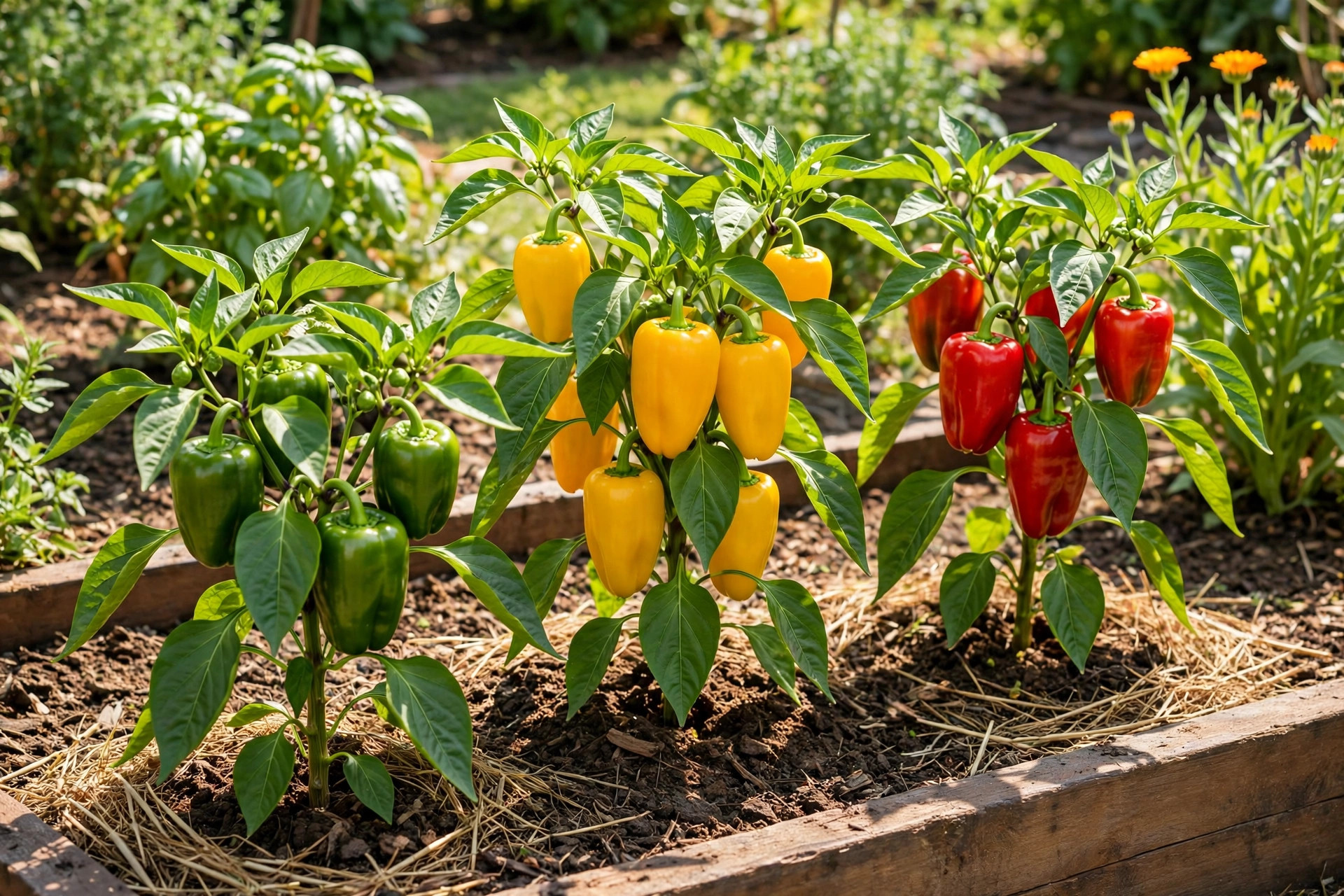
warm-season crop
At a glance
| Suitable zone groups | All four zone groups; tender perennial in frost-free regions, grown almost everywhere as a summer annual |
|---|---|
| Planting window | See the guide text below, in general terms relative to your last spring frost |
| Sun | Full sun |
| Soil | Warm, well-draining soil |
| Watering | Steady, moderate watering, moist but never waterlogged |
About this plant
Sweet Pepper is a great option for beginners willing to show patience, as plants take their time to yield sweet, colorful pods in warm weather. It grows successfully across cold (zones 3-4), cool (zones 5-6), warm (zones 7-8), and hot (zones 9-10) regions; while technically a tender perennial in frost-free regions, it is grown almost everywhere as a summer annual. Start seeds indoors 8 to 10 weeks (verify locally) before the average last spring frost, transplanting outdoors a few weeks after the last frost when warm conditions arrive.
Peppers require full sun, warm, well-draining soil, and steady, moderate watering so the ground remains moist but never waterlogged.
Common beginner failures and fixes
- Slow early growth: Keep seedlings warm and wait until spring nights are reliably warm before transplanting.
- Sunburned spots on peppers: Preserve healthy foliage to shade developing fruits from harsh midday sun.
- Blossoms dropping off: Protect plants from extreme heat spikes and avoid over-fertilizing with nitrogen.
- Stems snapping under fruit weight: Stake young main stems to support heavy pepper loads.
Beginner checklist
- Start seeds early indoors under warm conditions.
- Transplant outdoors only when soil feels warm.
- Choose a bright location with full sun exposure.
- Water moderately and consistently throughout the season.
- Insert a stake to keep growing stems upright.
Good neighbours
Plants that share a bed well with this crop. Each pairing notes why, and how strong the evidence is — “traditional practice” means gardeners have done it for generations without a solid trial behind it.
- Basil — Same warmth, sun and water needs, so the two share a bed well. (Traditional practice)
- Onion — Different root depths and no shared major pest; the two share a bed well. (Traditional practice)
- Marigold — Open flowers feed hoverflies and other aphid-eaters, which helps the whole bed. (Partly tested) General flower effect only; no pepper-specific trial.
Companion planting at a glance — the full table for all 20 pilot crops, with the Three Sisters note and the claims this site deliberately leaves out.
Zone groups and planting windows here are general guidance. Confirm your own zone and last frost date locally before planting.