Spinach
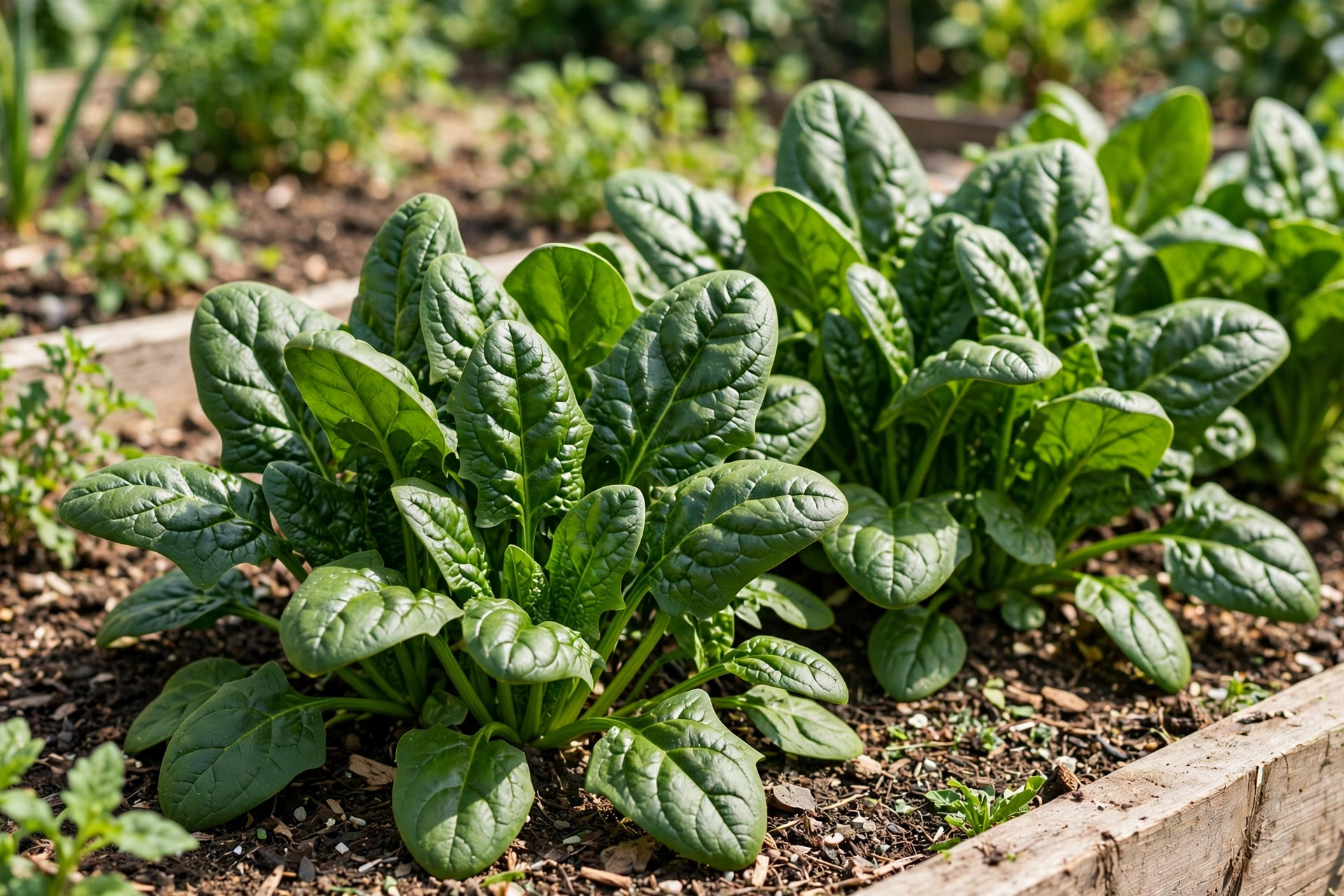
cool-season crop
At a glance
| Suitable zone groups | All four zone groups, as a cool-season annual (often a winter crop in hotter areas) |
|---|---|
| Planting window | See the guide text below, in general terms relative to your last spring frost |
| Sun | Full sun to partial shade |
| Soil | Loose, well-draining soil rich in organic matter |
| Watering | Light, regular watering, soil lightly damp and even |
About this plant
Spinach is a fantastic choice for beginners seeking a quick, fresh crop of nutrient-rich greens during the cooler months of the garden season.
It is cultivated as a cool-season annual across cold (zones 3-4), cool (zones 5-6), warm (zones 7-8), and hot (zones 9-10) regions, often grown as a winter crop in hotter areas.
Direct sow seeds outdoors in early spring several weeks before the last spring frost, as soon as the ground can be worked. You can also plant a second crop in late summer when temperatures begin to drop for a late autumn harvest.
This crop enjoys full sun to partial shade, making it useful for filling spots in the garden that do not receive all-day heat. It needs loose, well-draining soil rich in organic matter. Keep the soil light, damp, and evenly moist through light, regular watering sessions.
Common beginner failures and fixes
- Plants quickly stretch upward, produce flowers, and turn bitter.: Plant early in cool weather and harvest leaves promptly before high summer heat arrives.
- Seeds fail to sprout evenly or drop off.: Sow in cool soil and keep the top layer of earth lightly damp until leaves appear.
- Leaves look pale green or yellow instead of deep green.: Add a gentle, balanced organic nitrogen fertilizer to the soil.
- Holes appear in tender leaves from garden pests.: Place lightweight mesh row covers over seedlings right after sowing.
Beginner checklist
- Sow seeds directly outdoors in early spring while weather remains cool.
- Prepare a light, well-draining soil bed enriched with compost.
- Keep the upper layer of soil moist until sprouts emerge.
- Thin overcrowded seedlings so individual plants have room to expand.
- Harvest outer leaves individually to allow central leaves to keep growing.
Good neighbours
Plants that share a bed well with this crop. Each pairing notes why, and how strong the evidence is — “traditional practice” means gardeners have done it for generations without a solid trial behind it.
- Green Beans — Beans fix nitrogen; spinach is a light feeder that fits between bean rows. (Partly tested) Most fixed nitrogen feeds the next crop, not this season's neighbour.
- Radish — Quick crop that fits between slower plants and is harvested before they need the room. (Traditional practice)
Companion planting at a glance — the full table for all 20 pilot crops, with the Three Sisters note and the claims this site deliberately leaves out.
Sow this crop in batches instead of all at once — see Don't Sow It All at Once: Succession Sowing and Storing the Harvest.
Plant rescue
These indoor rescue pages relate to problems this plant's own guide already mentions:
Zone groups and planting windows here are general guidance. Confirm your own zone and last frost date locally before planting.