Rhubarb
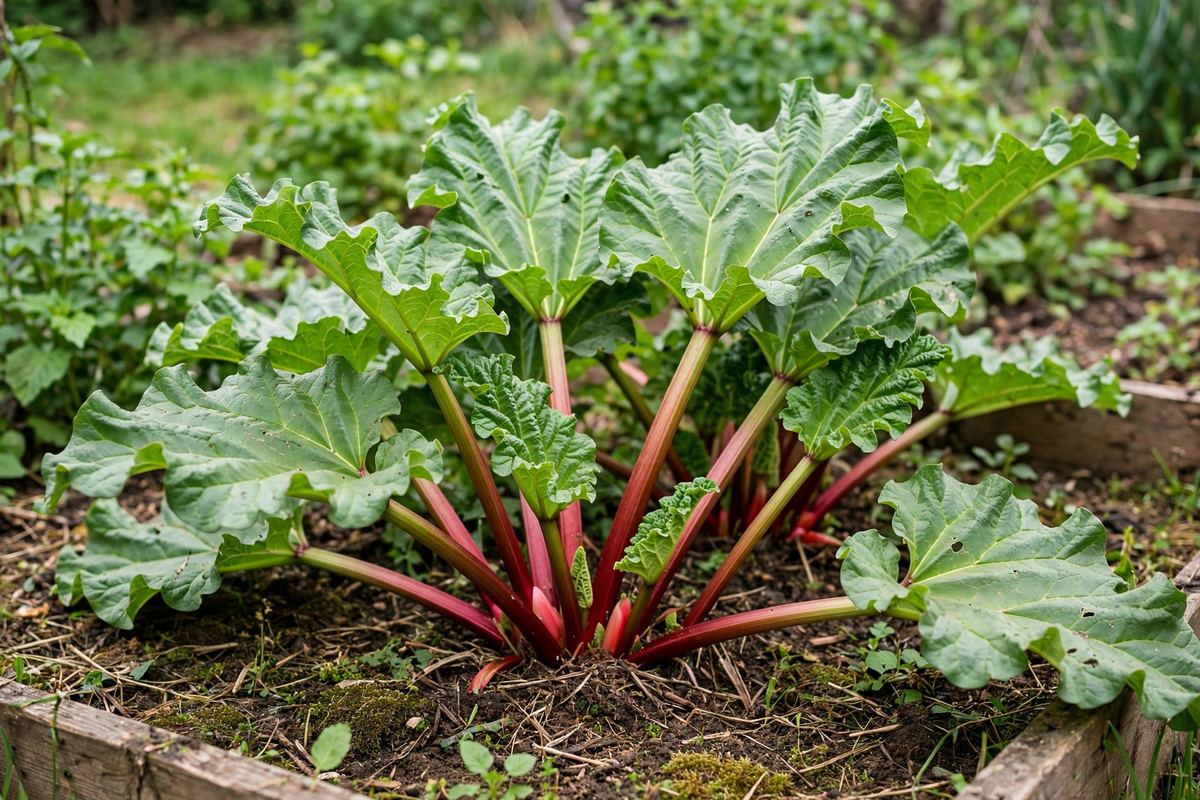
perennial-season crop
At a glance
| Suitable zone groups | Perennial in zones 3-4, 5-6 and 7-8; in zones 9-10, heat limits growth - verify locally |
|---|---|
| Planting window | See the guide text below, in general terms relative to your last spring frost |
| Sun | Full sun to partial shade |
| Soil | Rich, deep, well-draining soil |
| Watering | Regular watering, keep soil moist |
About this plant
Rhubarb is a perennial in zones 3-4, 5-6 and 7-8; in zones 9-10, heat limits growth, so verify locally before planting. Its broad leaves and tart stalks make it a distinctive crop for a permanent garden spot.
Choose full sun to partial shade and rich, deep, well-draining soil. Water regularly to keep the soil moist, and give the plant room to establish before harvesting heavily.
Common beginner failures and fixes
- Weak growth in a hot climate: Verify local suitability before committing to a permanent planting.
- Crown rotting in wet soil: Improve drainage and avoid leaving water pooled around the crown.
- A young plant losing vigor after harvest: Leave its stalks to support establishment and harvest lightly once it is growing strongly.
- Confusing leaves with edible stalks: Discard the leaves; only the stalks are eaten.
Beginner checklist
- Confirm zone suitability and verify locally in zones 9-10.
- Choose full sun to partial shade.
- Prepare rich, deep, well-draining soil.
- Water regularly to keep soil moist.
- Let the plant establish and keep leaves out of the kitchen.
Zone groups and planting windows here are general guidance. Confirm your own zone and last frost date locally before planting.