Peas
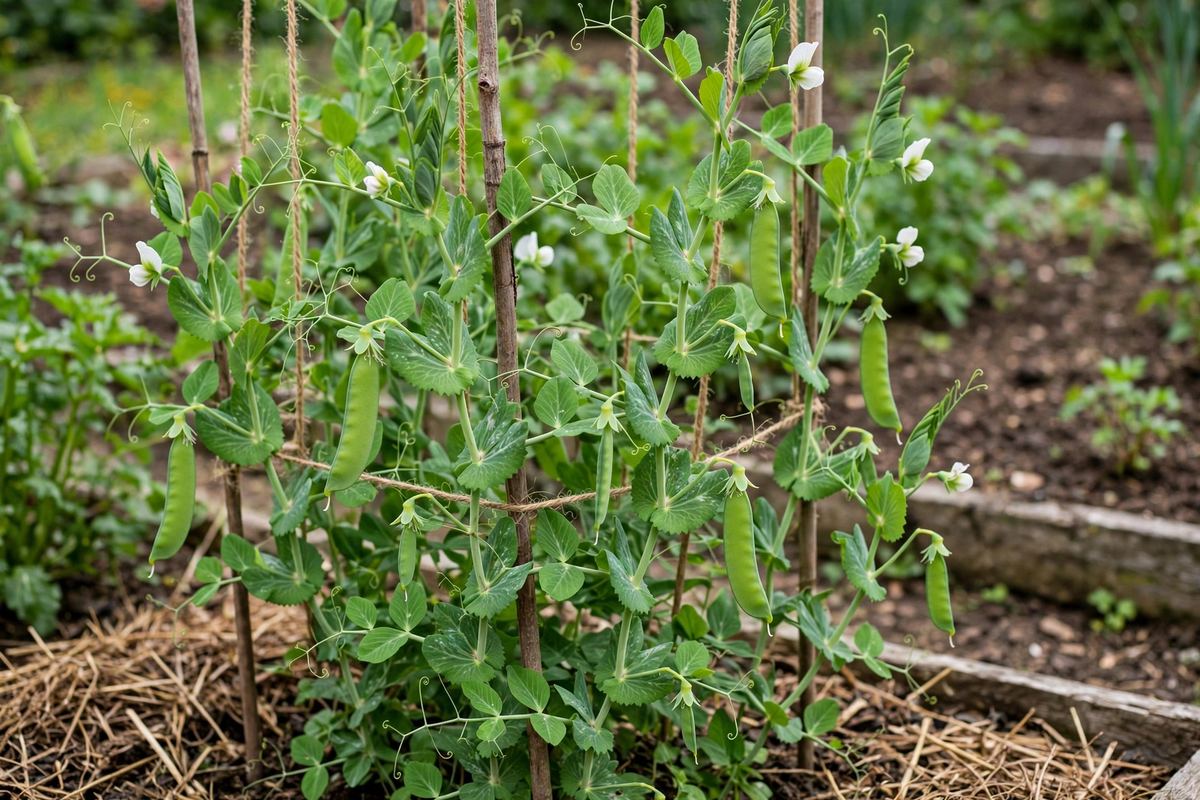
cool-season crop
At a glance
| Suitable zone groups | All four zone groups (3-4, 5-6, 7-8, 9-10), as a cool-season annual |
|---|---|
| Planting window | See the guide text below, in general terms relative to your last spring frost |
| Sun | Full sun to partial shade |
| Soil | Loose, well-draining soil rich in organic matter |
| Watering | Steady, even moisture, avoid waterlogging |
About this plant
Peas are a crisp cool-season crop that thrives in the spring and autumn months across all growing zones. Plant seeds outdoors in early spring as soon as the soil can be worked, or in late summer for a fall harvest. They prefer full sun to partial shade and light, well-draining soil rich in organic matter.
Regular moisture is key to producing tender pods, so water evenly while keeping the foliage dry whenever possible to discourage disease. Tall or vine varieties need a sturdy trellis for support, while compact dwarf types can grow with minimal staking.
Common beginner failures and fixes
- Yellowing vines: Improve soil drainage and avoid overwatering during damp spring weather.
- Poor pod development: Provide consistent moisture and avoid excess high-nitrogen fertilizers that push foliage over flowers.
- Powdery mildew: Space plants for good air circulation and water early in the day at the soil level.
- Falling stems: Install a trellising net or fence at planting time to keep vines supported off the ground.
Beginner checklist
- Choose a planting location that receives full sun to light partial shade.
- Prepare loose, well-draining soil mixed with compost.
- Set up a trellis or support structure before planting climbing varieties.
- Sow seeds directly into the garden in early spring.
- Keep the soil consistently moist while pods are developing.
Zone groups and planting windows here are general guidance. Confirm your own zone and last frost date locally before planting.