Lupine
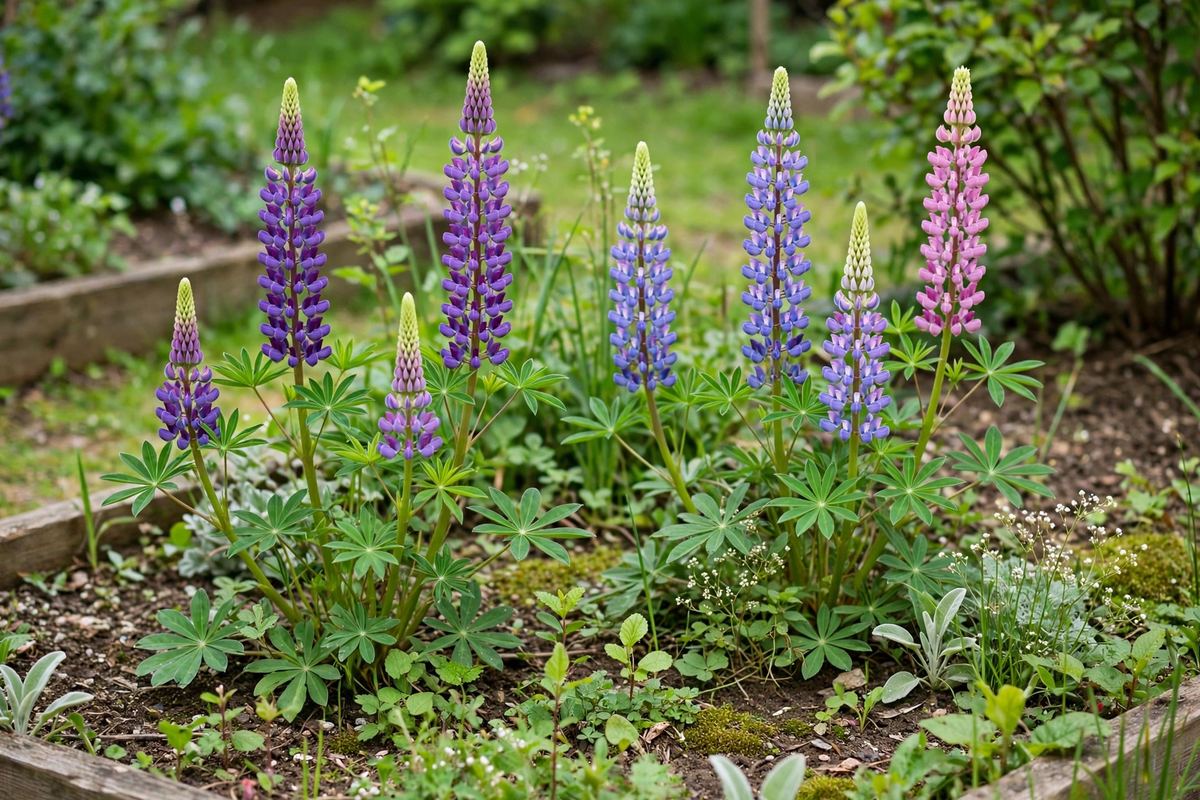
perennial-season crop
At a glance
| Suitable zone groups | Perennial in zones 3-4, 5-6 and 7-8; in zones 9-10, grown as a cool-season annual |
|---|---|
| Planting window | See the guide text below, in general terms relative to your last spring frost |
| Sun | Full sun to partial shade |
| Soil | Well-draining, slightly acidic soil |
| Watering | Moderate watering |
About this plant
Lupine grows as a perennial in zones 3-4, 5-6, and 7-8, while in zones 9-10 it is grown as a cool-season annual. It prefers full sun to partial shade and requires well-draining, slightly acidic soil.
Provide moderate watering to establish healthy root systems while guarding against waterlogged conditions. Plant seeds in early spring, or in late summer for a fall crop in warmer regions.
Common beginner failures and fixes
- Yellowing leaves: Test soil pH to ensure slightly acidic, well-draining conditions.
- Crown rot: Avoid overwatering and ensure excellent soil drainage.
- Poor germination: Nick or soak tough seeds prior to planting in early spring.
- Aphid infestations: Monitor foliage regularly and spray pests away with water.
Beginner checklist
- Select a spot with full sun to partial shade.
- Ensure soil is well-draining and slightly acidic.
- Sow seeds in early spring.
- Water moderately to keep soil consistently damp.
- Mulch lightly around the base to keep root zones cool.
Zone groups and planting windows here are general guidance. Confirm your own zone and last frost date locally before planting.