Kale
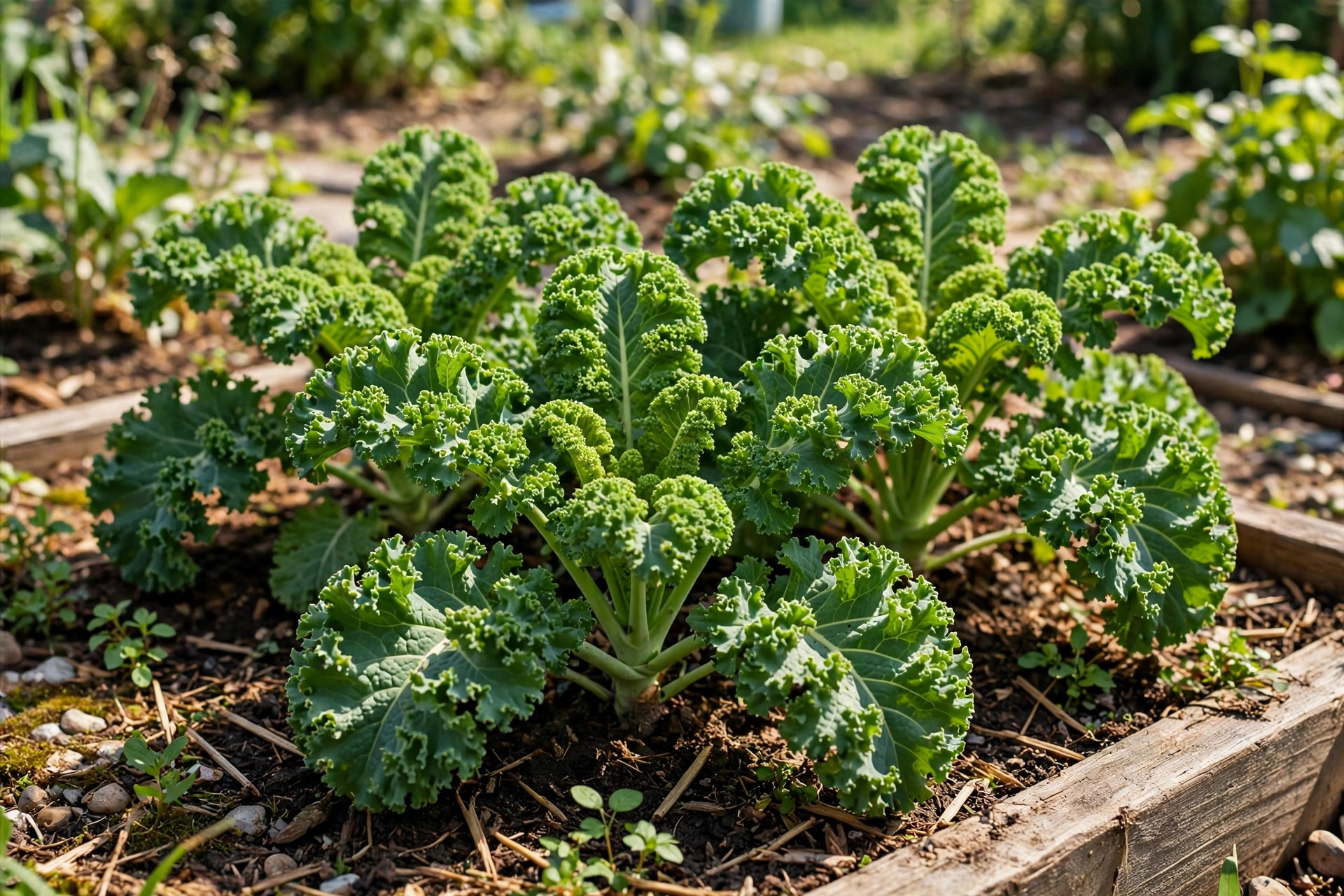
cool-season crop
At a glance
| Suitable zone groups | All four zone groups, as a cool-season annual (survives light winter freezes in milder zones) |
|---|---|
| Planting window | See the guide text below, in general terms relative to your last spring frost |
| Sun | Full sun, tolerates light shade in warmer months |
| Soil | Moist, rich soil with plenty of compost |
| Watering | Steady watering, uniformly moist without becoming soggy |
About this plant
Kale is a forgiving, highly durable option for new gardeners because it tolerates cold temperatures and continues yielding leaves over a long period.
It is grown as a cool-season annual in cold (zones 3-4), cool (zones 5-6), warm (zones 7-8), and hot (zones 9-10) regions, often surviving light winter freezes in milder zones.
Direct sow seeds or plant young nursery transplants early in spring a few weeks before the last spring frost. For an extended harvest, you can also plant in mid-to-late summer when the midsummer heat begins to ease.
Kale grows best in full sun but easily tolerates light shade during warmer months. It prefers moist, rich soil with plenty of compost mixed in for good drainage and nutrient content. Water steadily so the soil remains uniformly moist without becoming soggy or waterlogged.
Common beginner failures and fixes
- Green caterpillars chew large holes through the leaves.: Pick off insects by hand or cover crops with fine mesh netting.
- Leaves taste strong, tough, or excessively bitter.: Harvest leaves while small, or wait until after a light frost softens the flavor.
- Plants remain small and produce very few new leaves.: Water regularly and apply a top-dressing of compost around the roots.
- Clusters of tiny pests coat the undersides of foliage.: Blast insects off leaves using a direct spray from a garden hose.
Beginner checklist
- Plant seeds or transplants early in spring or late summer.
- Select a location with full sun or partial afternoon shade.
- Mix compost into the soil prior to planting.
- Protect young foliage with mesh covers if pests appear.
- Pick outer leaves first to encourage ongoing leaf development.
Good neighbours
Plants that share a bed well with this crop. Each pairing notes why, and how strong the evidence is — “traditional practice” means gardeners have done it for generations without a solid trial behind it.
- Nasturtium — In an Iowa study, nasturtium helped reduce cabbage looper and imported cabbageworm damage on broccoli, a close relative. (Tested in trials) Tested on broccoli, not on kale itself.
- Onion — In the same Iowa study, onion helped reduce the same two cabbage worms on broccoli. (Tested in trials) Tested on broccoli, not on kale itself.
- Beets — Different root depths, so the two share a bed without competing for the same soil layer. (Traditional practice)
Companion planting at a glance — the full table for all 20 pilot crops, with the Three Sisters note and the claims this site deliberately leaves out.
Sow this crop in batches instead of all at once — see Don't Sow It All at Once: Succession Sowing and Storing the Harvest.
Plant rescue
These indoor rescue pages relate to problems this plant's own guide already mentions:
Zone groups and planting windows here are general guidance. Confirm your own zone and last frost date locally before planting.