Eggplant
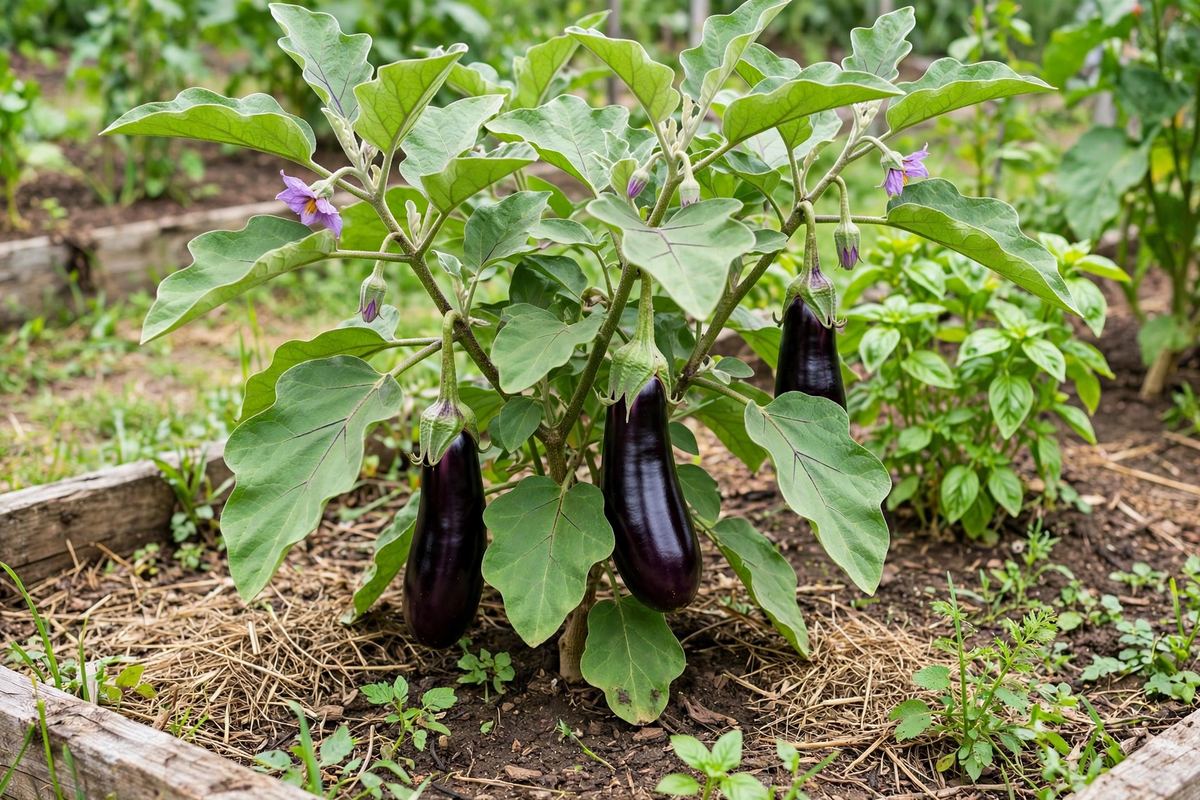
warm-season crop
At a glance
| Suitable zone groups | All four zone groups (3-4, 5-6, 7-8, 9-10), as a warm-season annual |
|---|---|
| Planting window | See the guide text below, in general terms relative to your last spring frost |
| Sun | Full sun |
| Soil | Rich, loose, well-draining soil |
| Watering | Deep, regular watering, soil evenly moist |
About this plant
Eggplant is a heat-loving warm-season vegetable that succeeds as an annual crop in all climate zones. Transplants should only be set into the garden in late spring after all danger of frost has passed and both air and soil have thoroughly warmed. Eggplants demand full sun and rich, loose, organic soil.
Keep the soil evenly moist throughout the growing season, using mulch to conserve water and prevent soil splash. Because heavy fruit can cause stems to bend or break, providing stakes or small cages early in the season keeps the plant upright.
Common beginner failures and fixes
- Flea beetle holes in leaves: Protect young transplants with lightweight row covers until plants are established.
- Blossom drop without setting fruit: Ensure plants receive full sun and steady moisture during hot weather.
- Dull, bitter fruit: Harvest fruits while their skin is still shiny and glossy before seeds harden.
- Falling branches: Stake or cage plants early to support heavy, maturing fruits.
Beginner checklist
- Choose the sunniest spot in your garden with well-draining soil.
- Wait to plant outdoors until after all danger of frost has passed and soil is warm.
- Install stakes or plant cages at the time of transplanting.
- Water deeply and regularly to keep soil uniformly moist.
- Harvest fruits promptly while the skin retains a brilliant gloss.
Zone groups and planting windows here are general guidance. Confirm your own zone and last frost date locally before planting.