Basil
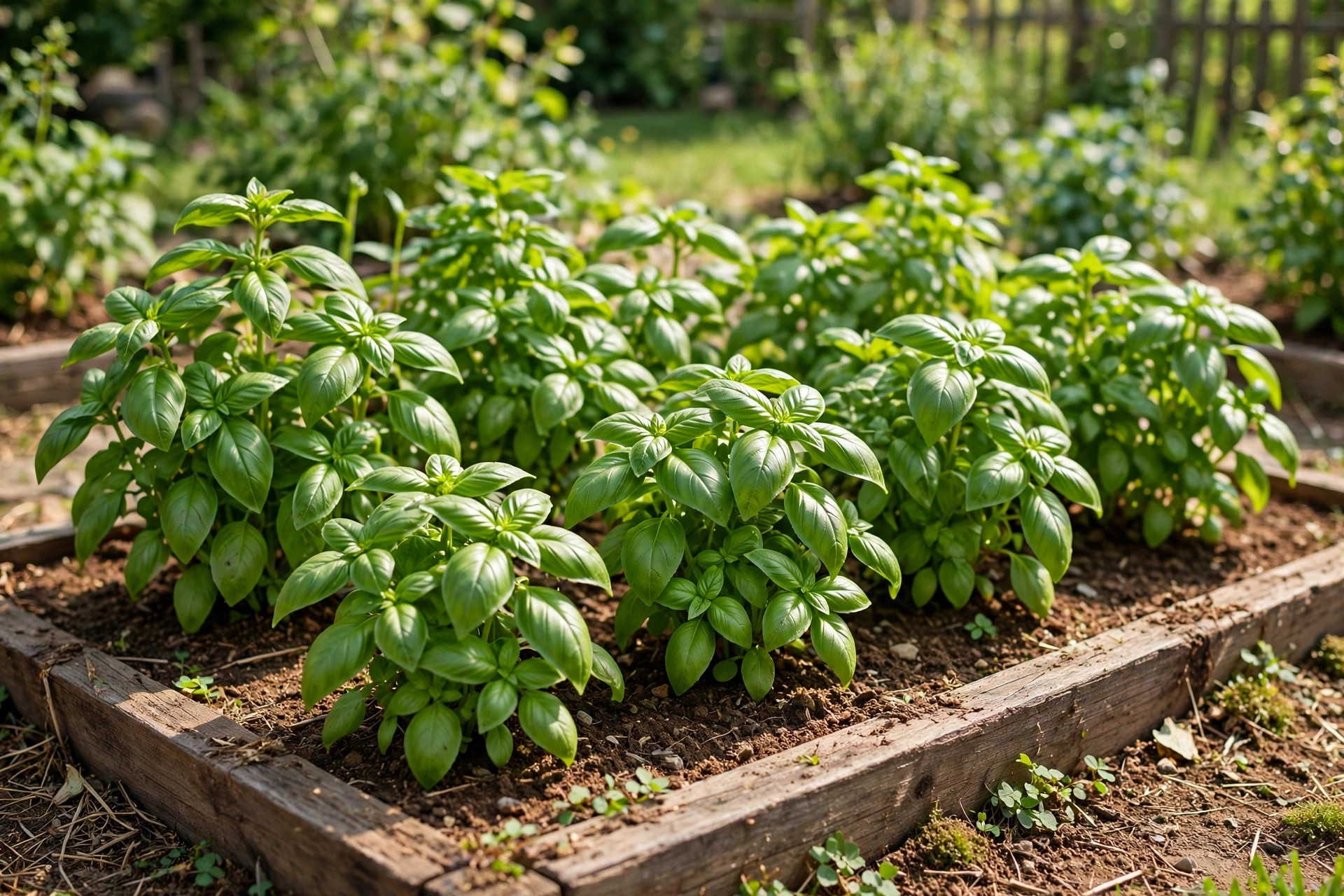
warm-season crop
At a glance
| Suitable zone groups | All four zone groups, as a frost-sensitive annual |
|---|---|
| Planting window | See the guide text below, in general terms relative to your last spring frost |
| Sun | Full sun |
| Soil | Loose, well-draining soil |
| Watering | Consistent moisture whenever the top inch of soil feels dry |
About this plant
Basil is an ideal starter herb for new gardeners because it sprouts quickly, thrives in summer heat, and yields continuous harvests all season. It grows happily in cold (zones 3-4), cool (zones 5-6), warm (zones 7-8), and hot (zones 9-10) regions, operating strictly as a frost-sensitive annual. Seeds can be started indoors a few weeks before the last frost or direct-sown outdoors once all frost danger has passed and the ground feels thoroughly warm.
This herb requires full sun, loose, well-draining soil, and consistent moisture whenever the top inch of soil feels dry.
Common beginner failures and fixes
- Leggy, weak stems: Pinch off the top leaf clusters regularly to encourage bushy branching.
- Blackened leaves after planting: Wait to move plants outdoors until spring nights stay reliably warm.
- Early flowering: Snip off flower buds immediately to keep leaves tender and flavorful.
- Yellowing foliage: Improve pot or bed drainage to prevent soggy root conditions.
Beginner checklist
- Plant only after the last spring frost has passed.
- Pick a warm, sunny spot in the garden or patio.
- Plant in well-draining soil rich in organic matter.
- Keep soil lightly moist but never waterlogged.
- Pinch stems frequently to promote dense leaf growth.
Zone groups and planting windows here are general guidance. Confirm your own zone and last frost date locally before planting.